EU-supported observers demand action on vote buying, results transparency ahead of general elections

Election observers supported by the European Union have called for tougher action against vote buying, greater transparency in election results management and stronger measures to prevent electoral violence ahead of Nigeria's forthcoming general elections.
The observers warned that persistent vote trading, weaknesses in results collation and the failure to prosecute electoral offenders could undermine public confidence in the electoral process despite improvements recorded in recent governorship elections.
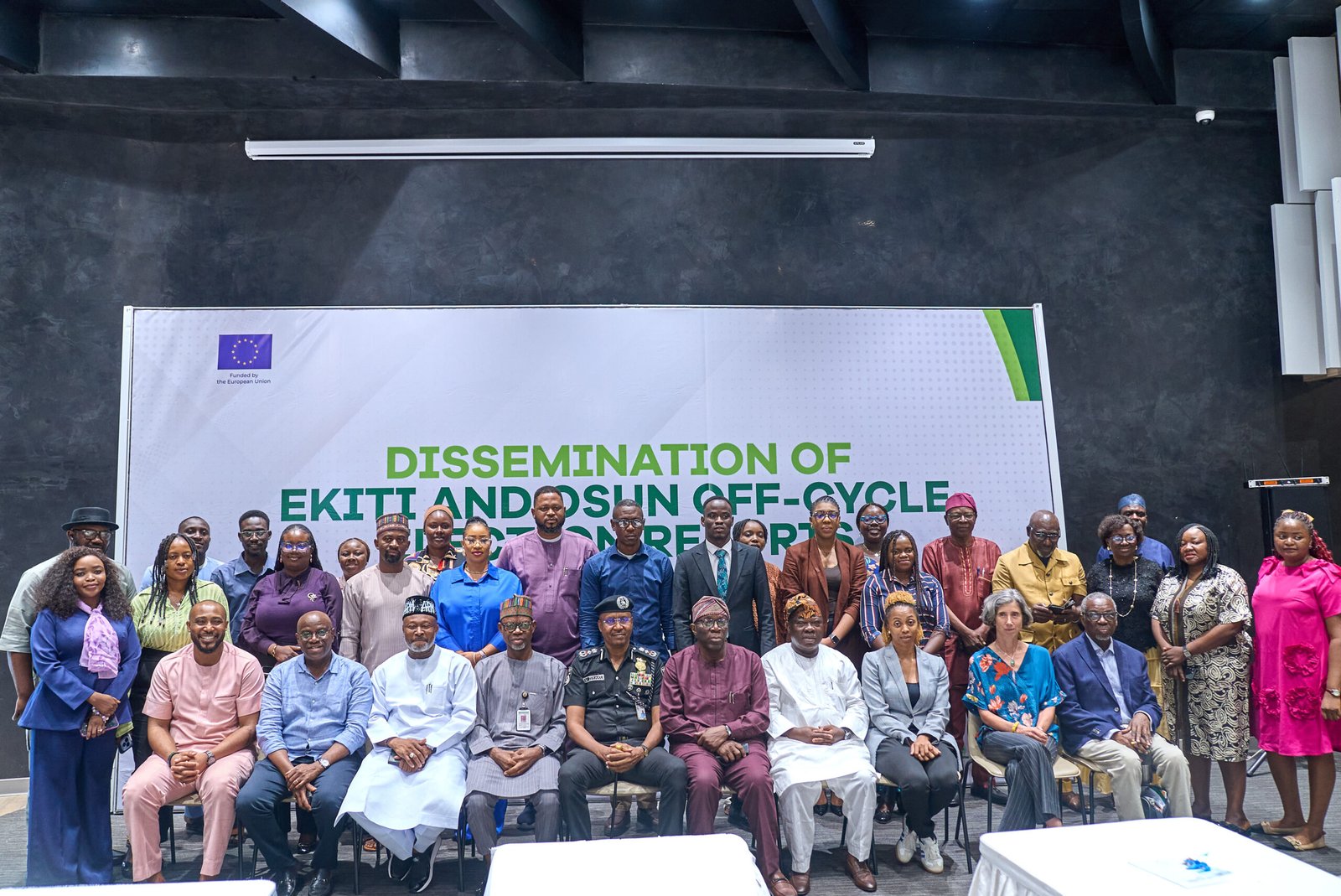
The concerns were raised at a stakeholders' dialogue titled “From State Elections to the General Elections: Protecting Electoral Integrity, Public Confidence and the Vote”, where findings from election observation missions in Ekiti and Osun states were presented.
The observation missions were supported through the European Union Support to Democratic Governance in Nigeria (EU-SDGN) programme, with implementing organisations deploying observers across both elections.
The organisations included Yiaga Africa, The Kukah Centre, the International Press Centre, the Centre for Media and Society (CEMESO), TAF Africa and the Nigerian Women's Trust Fund.
Presenting the findings, Prof. Bolade Eyinla acknowledged improvements in election administration by the Independent National Electoral Commission (INEC), particularly in the timely opening of polling units and the use of election technology.
The findings showed improvements in polling unit operations and the use of the Bimodal Voter Accreditation System (BVAS) to capture images of polling unit result sheets.
The officially declared results in both elections were also consistent with the ranges projected by independent parallel vote tabulation exercises, while no fatalities were recorded on election day.
Despite these improvements, Eyinla identified vote buying as a persistent threat to electoral integrity, with party agents frequently implicated in incidents documented by observers.
The findings highlighted cases of voters displaying marked ballot papers to third parties as evidence of their voting choices, alongside reports of cash payments to voters at some polling units in Osun.
He expressed concern that no arrests or prosecutions had been reported in connection with the documented incidents, raising questions about the effectiveness of enforcement measures against electoral offences.
The observers also identified weaknesses in results management and voter registration data.
In Ekiti, discrepancies in the registered voter figures used for calculating turnout raised concerns about the accuracy of official election statistics.
In Osun, concerns centred on results collation and the operational difficulties arising from a court order requiring the inclusion of an additional candidate shortly before the election, necessitating the reprinting of ballot papers.
Although women and persons with disabilities participated actively in both elections, the findings indicated that accessibility and inclusion remained inconsistent across polling locations.
On results transparency, Eyinla called on INEC to provide greater clarity on how electronically captured polling unit results are processed, validated and used in resolving discrepancies.
He said the commission had yet to respond to a request for clarification on the purpose and destination of electronically captured polling unit results.
He urged INEC to publish its back-end results validation procedures, clarify which records take precedence when discrepancies arise and improve public access to ward-level collation documents.
The observers also recommended stronger protection of ballot secrecy, effective investigation and prosecution of electoral offences, and timely judicial decisions on election-related disputes.
Responding during a moderated discussion involving INEC, the Nigeria Police Force and the Inter-Party Advisory Council (IPAC), an INEC representative said preparations for the general elections were progressing, with most non-sensitive election materials already delivered to state offices.
The representative maintained that INEC neither buys nor sells votes and does not possess the powers to arrest electoral offenders.
He also acknowledged the need to clean up the voter register and make Permanent Voter Card collection more accessible to eligible voters.
A Deputy Inspector-General of Police who supervised security operations during the Osun election said election security required cooperation among security agencies, electoral institutions, political parties and citizens.
He explained that the substantial police deployment during the election was intended to deter criminal activity rather than intimidate voters.
Addressing incidents of violence before the election, he attributed the reported deaths to clashes involving cult groups allegedly used by political actors.
The IPAC chairman said the council had condemned the violence in Osun and called for renewed attention to the conduct and financing of political parties.
He advocated the restoration of public funding for political parties and questioned the financial incentives associated with holding political office in Nigeria.
Earlier, Dr Akin Akingbulu commended the European Union for its sustained support for Nigeria's democratic development, emphasising that election observation should be viewed as an opportunity for institutional improvement rather than an exercise in assigning blame.
He described observation as “not accusation”, but a means of identifying shortcomings and encouraging corrective action.
In her closing reflections, Asabe Ndahi urged electoral stakeholders to move beyond identifying problems and begin implementing recommendations arising from previous elections.
She called for action on electoral reform proposals already submitted to the National Assembly by INEC and IPAC, improved voter register management, intelligence-led security deployment and stronger internal democracy within political parties.
Ndahi also stressed the need to address hate speech and other practices capable of fuelling political tensions.
The dialogue formed part of the European Union's support, through the EU-SDGN programme, for strengthening electoral institutions, promoting citizen participation and improving accountability in Nigeria's electoral process.
By bringing together election observers, electoral authorities, security agencies and political parties, the engagement provided an opportunity to examine lessons from the Ekiti and Osun elections and identify measures requiring attention before the general elections.