




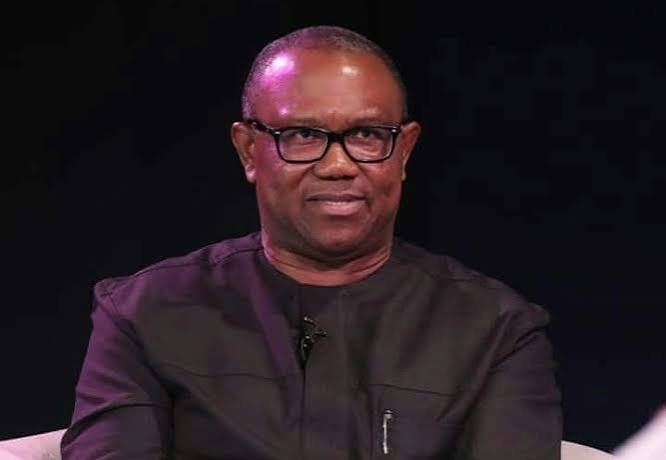
The presidential candidate of the Nigeria Democratic Congress (NDC), Peter Obi, has accused President Bola Tinubu of worsening poverty, insecurity and corruption in Nigeria, claiming that about 16 million Nigerians have been pushed into extreme poverty in 2026.
Obi also alleged that Tinubu lacked the competence, capacity and commitment to address the country’s economic and security challenges.
He made the allegations in a statement following the inauguration of the NDC Campaign Council in Abuja on Monday, October 26, 2026.
He lamented that Nigeria, despite its abundant natural resources, had become the world’s poverty capital, with more than 140 million citizens living in multidimensional poverty.
READ ALSO:
- 2027: Kwankwaso’s NDC Will Not Make Impact In Kano – Gov Yusuf
- 2027: Obi, Kwankwaso Will Take Over Aso Rock, NDC Chairman Declares
- Obi, Kwankwaso, Dickson Arrive Abuja For NDC NEC Meeting
According to Obi, widespread corruption, insecurity, unemployment and inequality have worsened the hardship faced by Nigerians.
He also faulted the Tinubu administration over the country’s debt, which he put at more than ₦165 trillion, arguing that the removal of the fuel subsidy and increased borrowing had not translated into corresponding productivity gains.
“In the last three years, President Tinubu has foisted on Nigeria a reign of corruption and duplicity, resulting in extreme poverty,” Obi said.
He further accused the President of blaming past administrations and opposition leaders for the hunger and poverty affecting Nigerians.
On electricity, the NDC presidential candidate said Nigeria’s power sector remained in crisis despite Tinubu’s promises to improve supply.
He pledged that an NDC government would pursue electricity reforms focused on reliability, affordability, investment and accountability, working with relevant federal and state institutions, regulators, operators and investors to address challenges in generation, transmission and distribution.
Obi also accused the APC-led administration of deepening national divisions and insecurity, while weakening public institutions and undermining confidence in government budgets and laws.
He called for a new political order founded on fairness, justice, equity, accountability and productivity, urging Nigerians to support his presidential ambition alongside his running mate, Rabiu Musa Kwankwaso.
The former governor said an NDC government would prioritise security, education, healthcare, agriculture and industrialisation, while working to reduce the cost of living and lift Nigerians out of poverty.
On security, Obi pledged to dismantle the networks of bandits and kidnappers, identify their sponsors and restore freedom of movement across the country.
He said the administration would use lawful means to pursue criminals and ensure that any crime committed after its inauguration was dealt with decisively.
Obi further promised that internally displaced persons would be resettled in their communities within the first two years of an NDC administration.
He said restoring security would enable farmers to return to their farms, boost food production and support the establishment of processing facilities close to farming communities.
The NDC candidate also promised to transform Northern Nigeria into an agro-industrial hub, citing the region’s vast land resources and agricultural potential.
On education, he pledged to work with state governments to improve primary, secondary and technical education, train more teachers and improve their remuneration and welfare.
He added that his government would subsidise education to ensure that no child or qualified Nigerian was denied access to learning because of financial constraints.
Obi also promised targeted subsidies for critical sectors, including education, agriculture and energy, as part of efforts to stimulate economic growth and improve living standards.
He reiterated his commitment to building what he described as a new and productive Nigeria, insisting that the country could overcome its current challenges through responsible leadership and effective governance.
Source: Politics Archives – New Telegraph


